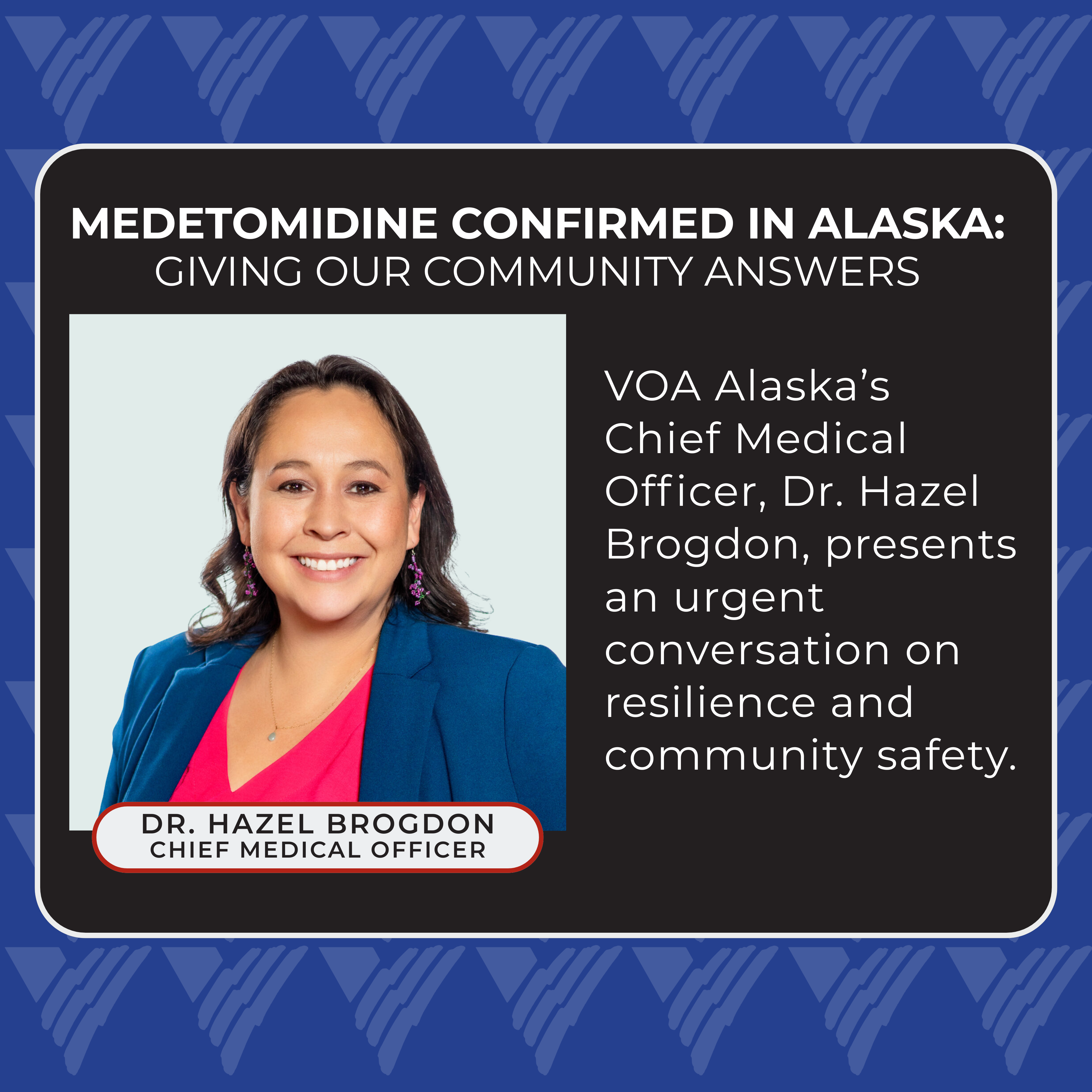
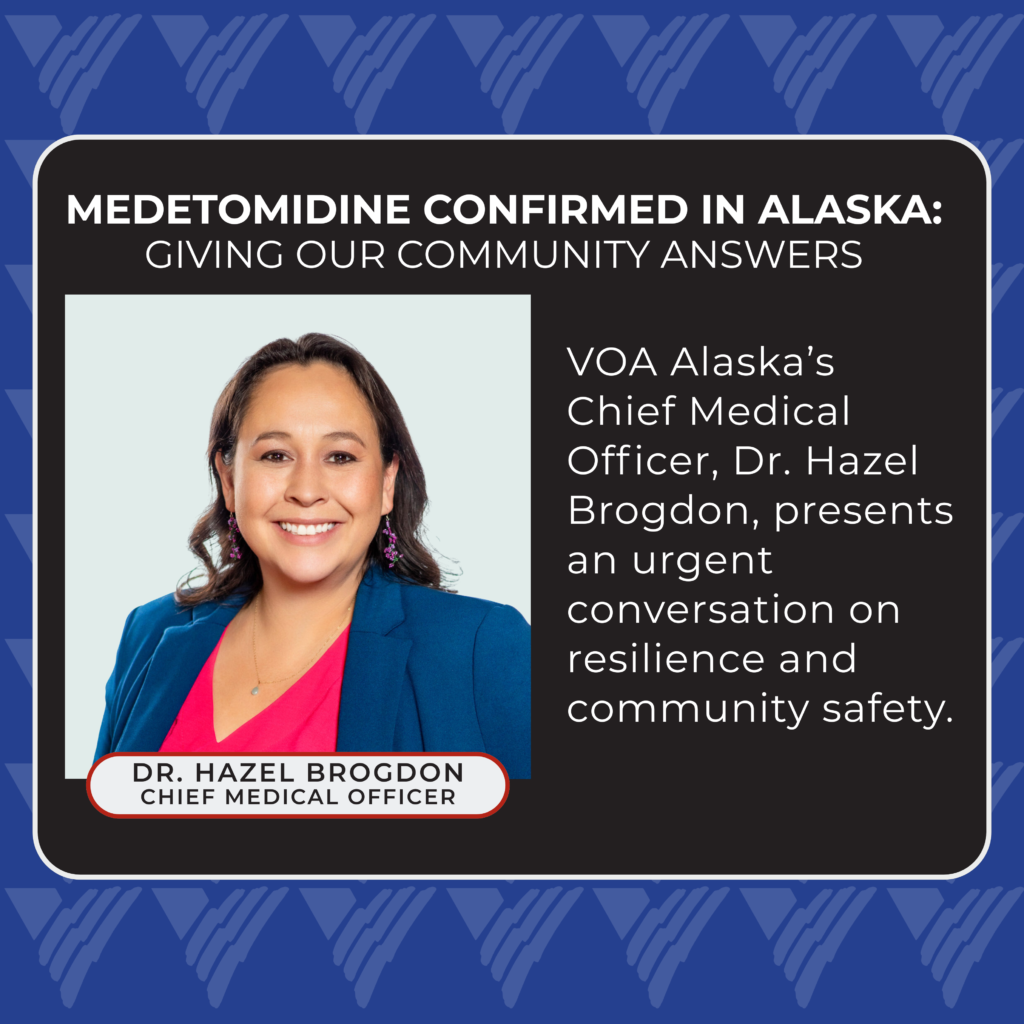
The Alaska Society of Addiction Medicine recently reported multiple confirmed cases of medetomidine in the Anchorage area, heavily indicating its presence as an adulterant in the local illegal fentanyl supply. Because this substance changes how we must respond to overdoses and addiction treatment, VOA Alaska sat down with our Chief Medical Officer, Dr. Hazel Brogdon, to get the facts for our youth and families.
Understanding Medetomidine: The Q&A with Dr. Hazel
What is medetomidine, and why is it being mixed with fentanyl?
Dr. Hazel: Medetomidine is a strong veterinary medicine used to sedate animals—it is completely unapproved for human use. It is currently being added to the illicit drug supply to make fentanyl appear more potent or to make its effects last longer.
When medetomidine is ingested by a person, it can cause severe low blood pressure (hypotension), a dangerously slow heart rate (bradycardia), and profound sedation.
How does medetomidine change the nature of an overdose? What should people look for?
Dr. Hazel: The most critical sign is the response to emergency treatment. If a person remains completely unconscious and heavily sedated even after the use of a Narcan (naloxone) rescue kit, you should consider that they may have ingested medetomidine. Regardless of how they respond to Narcan, you should always call 911 immediately for emergency medical assistance.
We know Narcan doesn’t reverse medetomidine. Should people still use it?
Dr. Hazel: Yes, absolutely. People should continue to use Narcan for any unresponsive person and call 911 immediately. Because medetomidine is almost always mixed with fentanyl, Narcan is vital to reverse the opioid portion of the overdose so the person can breathe. However, know that the sedation from the medetomidine may still keep them unconscious.
What makes withdrawal from this substance so complex?
Dr. Hazel: When a person drops off or withdraws from this medication, it causes a severe, opposite effect on the nervous system. It causes heart rates to spike (tachycardia), blood pressure to dangerously increase (hypertension), and can cause vivid hallucinations and severe tremors.
The withdrawal from this veterinary medicine is so powerful that several people end up requiring intensive care unit (ICU) admission for medical life-support and monitoring. There are already confirmed cases of medetomidine withdrawal requiring this level of care right here in Alaska.
Are there unique risks or psychological impacts this poses to young Alaskans?
Dr. Hazel: Knowledge is power. Including young people in these discussions and transparently sharing this information can be genuinely lifesaving. It’s vital that we share the potential risks of these add-ins to the current drug supply so that our youth have up-to-date information and understand exactly how and where to seek help.
If a parent, family member, or friend is worried about a loved one right now, what is your most important piece of advice?
Dr. Hazel: Never worry alone!! Talk with a healthcare professional, a trusted adult, or a clinician, and encourage your loved one to seek help. You do not have to navigate this crisis by yourself.
Where to Turn for Immediate Support
If you, your teenager, or a loved one is struggling with substance use or navigating a mental health crisis in the Anchorage area, please connect with our local resources immediately:
- VOA Alaska Rapid Response Team: If you need immediate intervention, support, or path-to-treatment guidance for a young person (ages 13–24), reach out to our Rapid Response Team directly at 907-419-4158 call/text.
- Walk-In or Contact VOA: You can visit our Anchorage clinic at 2600 Cordova Street or call our intake line at (907) 279-9640 for behavioral health and treatment services.
- The 988 Lifeline/CARELINE: For immediate, confidential mental health or substance use crisis support 24/7, call 877-266-4357 or text 988.
- Medical Emergencies: If you suspect an overdose and a loved one is unresponsive, administer Narcan and call 911 immediately. Be sure to inform the dispatchers if Narcan has been given and the person is still not waking up.
To learn more about the medical summaries of this emerging drug supply threat, you can review the CDC Medetomidine Situation Summary.